TJ Cole Cultivates Inclusive Connection Through Classical and Electronic Music

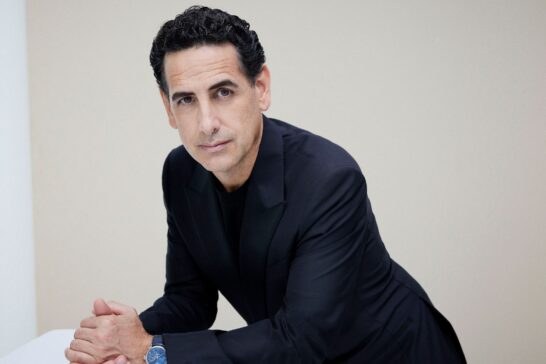
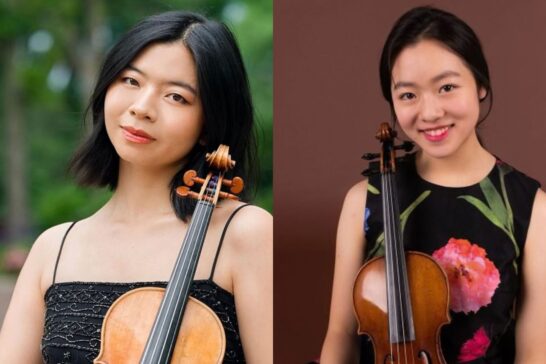
TJ Cole (they/them) (Composition ’16, ArtistYear ’17) is an interdisciplinary artist whose work fuses electronic and classical music to shape sound worlds distinctly their own. Their Daniel W. Dietrich II Young Alumni Fund-supported work TAROT: A Guide to Queering Human Connection embodies this approach, featuring live cello alongside electronic audio with collage-like effects.
The album-length recording project, composed by and written for fellow alum Gabriel Cabezas (Cello ’13), centers the voices and stories from transgender, queer, and polyamorous individuals, explored through the lens of tarot.
“I hope TAROT can be a point of connection for different kinds of people, highlighting individual queer perspectives and creating space for these incredibly important communities,” Cole says. “I love live strings and the infinite sound possibilities of audio, and bringing these worlds together has been one of my favorite parts of creating this piece.”
Cole’s recent YAF grant also supports the performance and touring of their electronics-based work, including their large-scale synthesizer concerto Phenomenal of the Earth, inspired by their immersive experiences in nature.
Read on to learn more about Cole’s inspiration for TAROT, what they’re most excited about, and the impact they hope to have.
What inspired the concept for TAROT: A Guide to Queering Human Connection—from both a storytelling and musical composition perspective?
TAROT grew out of a few different threads. It’s partly a love letter to the queer community of Louisville [Kentucky], which has shaped and held me over the last four years. It also grew out of conversations with my friend and collaborator, Gabriel Cabezas (Cello ’13), and our shared fascination with tarot as a practice of self-reflection and spirituality. Tarot felt like a fitting lens to explore these themes while sharing stories from Louisville’s queer community.
All of the audio is created from queer human voices—and sometimes it’s musical material built from my own voice.
What makes this work important—for queer, transgender, and polyamorous individuals, and for your work as an artist-citizen?
I believe this work is just as important for people outside of queer communities as it is for those within them. Queer and polyamorous communities have spent a great deal of time unpacking inherited ideas about relationships and identity; they hold an incredible amount of depth and wisdom.
My queer and classical music identities have felt extremely separated for a long time, but queering classical spaces is both an invitation for queer communities to experience a space that is not typically inviting, and for classical music communities to create broader, more inclusive spaces.
You’re also working on a broader portfolio of interdisciplinary, electronics-based work, including your synthesizer concerto Phenomenal of the Earth, as well as the electro-acoustic duo Choir Siren. Are there any projects or initiatives coming up you’re particularly energized by?
I’m currently developing some solo performance works that use live synthesizers, live voice processing, movement, props, and sound design. It’s the first time in a long that I’ve written for myself to perform, which feels both incredibly vulnerable, and like a natural progression.
I’m also excited about several documentary-based community projects. They’re all interview-based projects with communities around the country, and they orbit around different combinations of themes like community, queerness, nature, and people’s emotional landscapes.
At Curtis, we believe in the power of sharing one’s artistry beyond the stage, especially for fostering human connection and shared purpose. In what ways does your work align with these values?
A lot of my work over the last decade has been rooted in connecting with people: the nuance, depth, and complexity of human emotional landscapes. I’m often interested in the juxtaposition between the uniqueness of our individuality, and the broader emotional themes that feel like some kind of universal human experience.
A few years ago, I became incredibly burnt out, partly because the trajectory of my career as a composer was set up to be incredibly isolating. Finding ways to collaborate and connect with people throughout the creative process has become a survival tool; I think that curiosity around connection carries into the work itself. We all need connection to survive.
What impact do you hope TAROT and your continued electronics-based work will have on the greater community?
I plan to continue exploring electronics and audio as tools for creating depth and intimacy in my work. Whether that’s through studio albums or live performance, my fascination with recorded voices is to preserve the emotional nuance of a particular community and moment in time. More than anything, I hope my work invites presence and encourages people to look more deeply into themselves.
___________________________________________________________________________________________________________
The Daniel W. Dietrich II Young Alumni Fund is an annual grant program dedicated to supporting young alumni of Curtis. These grants—ranging from $1,000 to $10,000—are part of Curtis’ ongoing efforts to strengthen support for alumni in the years that follow graduation and help young alumni who may be experiencing obstacles of any kind in the pursuit of their musical careers. Learn more.