Curtis Symphony Orchestra Presents “Yannick Leads Mahler 9” on November 8

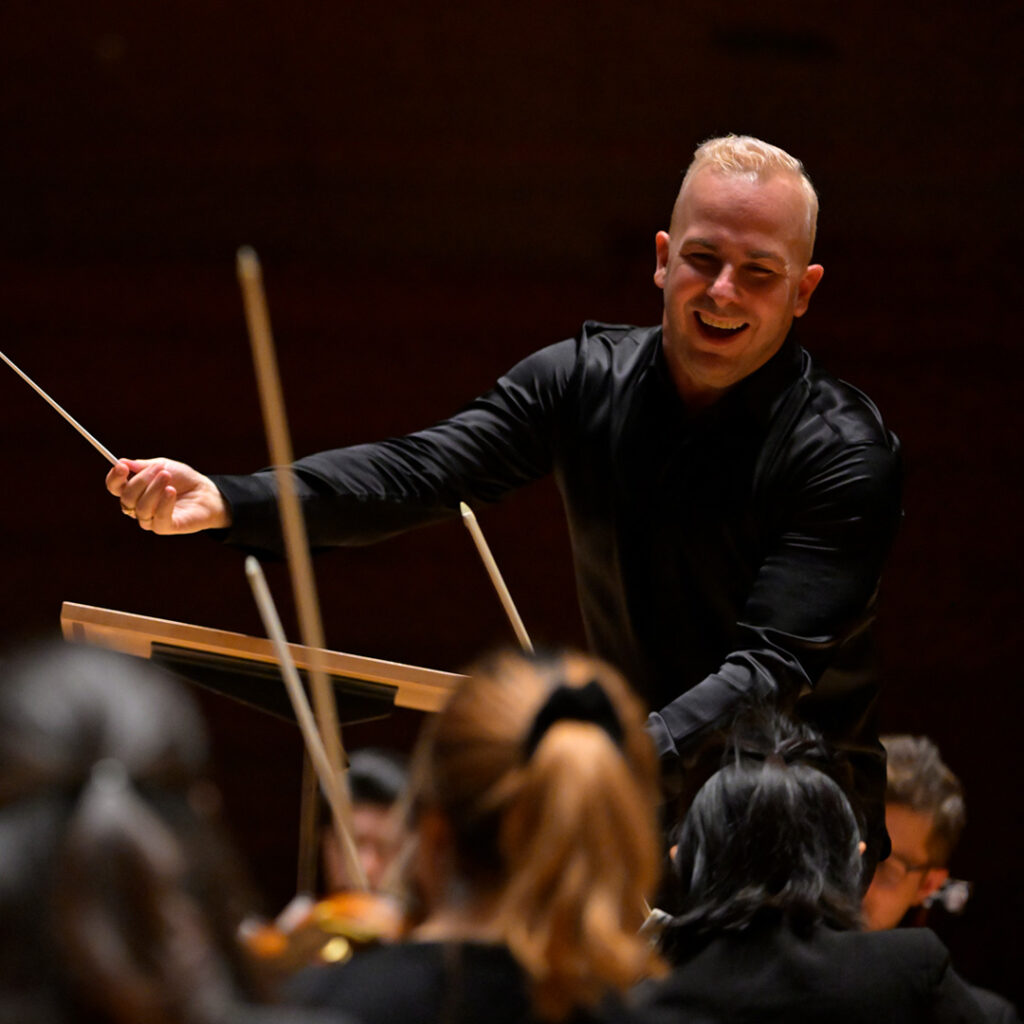
Philadelphia, PA—October 22, 2026—The 2026–27 Curtis Symphony Orchestra series continues on Sunday, November 8 at 5:00 p.m. in Marian Anderson Hall, Kimmel Center, with an introspective program featuring Gustav Mahler’s transcendent Symphony No. 9, led by Grammy Award-winning conductor Yannick Nézet-Séguin. The concert also features Valerie Coleman’s stirring orchestral anthem Umoja, conducted by Rita E. Hauser Conducting Fellow Yiran Zhao.
Coleman’s Umoja opens the evening. Meaning “unity” in Swahili, Umoja began as a piece for women’s choir, which Coleman later adapted for Imani Winds, Curtis’ first-ever faculty wind quintet that she co-founded. Inspired by the shared oral histories and call-and-response patterns of a drum circle, Umoja moves from an ethereal opening and a solo violin melody to dissonant brass and percussion evoking injustice and hate—and eventually, a call for unity. In 2019, Coleman became the first African American woman to receive a commission from the Philadelphia Orchestra for the work; Yannick Nézet-Séguin led its premiere later that year.
Mahler’s transcendent Symphony No. 9 closes the evening. As Mahler’s last completed score presented to the public, his Ninth Symphony is often read as his farewell to life—a long goodbye. Composed in 1909 after a series of personal ordeals—the death of his four-year-old daughter, Maria, his forced resignation from the Vienna State Opera, and a diagnosis of serious heart ailment—the symphony balances nostalgia and tenderness with unease and defiance.
At roughly 25 minutes, the first movement is as long as many four-movement symphonies, unfolding around a halting rhythm that conductor Leonard Bernstein (Conducting ’41) famously compared to Mahler’s irregular heartbeat. The second movement returns to one of Mahler’s favorite musical forms, the Austrian ländler, gradually giving way to a sinister and increasingly disorienting waltz. The stormy third movement intensifies these tensions before the finale offers a spacious, hymn-like melody that gradually dissolves into silence.
Bruno Walter, who in 1912 conducted the Ninth’s posthumous premiere with the Vienna Philharmonic, became one of the piece’s leading advocates. He also made a case for the symphony as autobiography, describing the last movement as Mahler’s peaceful “farewell to the world… like the melting of a cloud in the ethereal blue.”
This season, Curtis also launches Curtis Symphony Orchestra: Project CSO, a rehearsal broadcast series offering viewers a front-row seat to students’ learning process and development. In these free livestream/broadcast events, students perform a culminating, final reading following weeks of study, collaboration, and discovery. Performances provide insight into Curtis’ learn-by-doing philosophy, highlighting milestone moments in students’ artistic growth.
The next session is Friday, December 5 at 5:00 p.m. ET, featuring Pyotr Ilyich Tchaikovsky’s Symphony No. 5. Additional dates and repertoire will be announced later in the season. The livestream broadcasts will be accessible on Curtis’ YouTube channel, and on-demand recordings will be available up to 90 days after performance. The first Project CSO broadcast, featuring works of Weber, Strauss, and Gershwin, is available to watch at curtis.edu/YouTube through December 16, 2026.
Single tickets for “Teddy Leads Adams & Beethoven” at Marian Anderson Hall start at $24 and are available through curtis.edu. Curtis’ flexible Choose Your Own subscription option offers 25% off single ticket prices when purchasing tickets to two or more performances. To order a subscription, visit curtis.edu/subscribe, call (215) 893-7902, or email tickets@curtis.edu.