Mary Louise Curtis Bok: A Vision for Curtis

On Tuesday, October 13, Curtis will release the first-ever published biography of the school’s founder, Mary Louise Curtis Bok, as part of its Founder’s Day. Written by Curtis’ senior archivist, Barbara Benedett, and published by Bauer and Dean Publishers, A Practical Philanthropist reveals never-before-published details of this remarkable woman, taking readers on an insightful journey through this special period in the histories of Philadelphia, Curtis, and classical music.
In the second part of this two-part series, we offer a glimpse into Mary’s vision for the school—including its inclusive culture and innovative approach to music education.
A Culture of Inclusivity
Mary envisioned Curtis as an American alternative to the European conservatory model—not simply a replica of one. She believed the school’s success should be measured not by how many famous artists it produced, but by the quality and meaning of the experiences it provided its students.
“Creating famous artists isn’t the point. Our success shouldn’t simply be measured by how many stars we put out.” —Mary Louise Curtis Bok
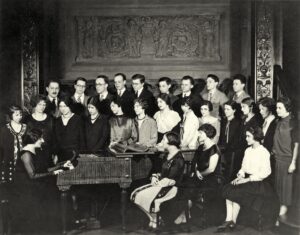
Mary’s vision also helped make Curtis an unusually inclusive institution for its time. The school’s first class in 1924 included six Black students, and women held prominent roles among its early faculty and administration. Curtis student Edna Phillips (Harp ’30) went on to become the first woman in the Philadelphia Orchestra in 1930—an achievement that reflected the opportunities available to women musicians at Curtis during Mary’s tenure.
Pictured above: Polish harpsichordist Wanda Landowska, who came to Curtis in 1925 as an original member of the faculty, with students.
An Innovative Approach to Education
Curtis brought together leading performers and teachers from across Europe and the United States, creating an unusually varied musical environment influenced by Polish, Russian, Belgian, and other traditions. This differed from the predominantly Germanic model followed by other major conservatories.
Curtis was innovative in other ways, too: Students could study instruments and fields that were uncommon at the time, including viola and accompanying. Philadelphia Orchestra conductor Leopold Stokowski even encouraged Curtis to develop musicians who could meet the needs of the orchestra, helping establish the school as a pipeline for the ensemble.
Ultimately, Curtis helped reimagine what a conservatory education could be, incorporating musical studies, liberal arts, and interdisciplinary learning. Mary believed great musicians needed to be curious and thoughtful—not just accomplished performers. Her well-rounded approach to education remains a defining aspect of the school today.
This event includes a light reception at 6:30 p.m., followed by a concert and author’s talk at 7:30 p.m. in Field Concert Hall. Admission is complimentary but requires advance registration.
The publication of A Practical Philanthropist is made possible by the generosity of the Mary Louise Curtis Bok Foundation.
Photo credit (main header image): Victoria Bok