A Portrait of Legendary Conductor-Composer Leonard Bernstein

On November 14, 1943, 25-year-old Leonard Bernstein (Conducting ’41) stepped into the defining moment of his career. When guest conductor Bruno Walter fell ill just hours before a New York Philharmonic concert, the orchestra’s newly appointed assistant conductor was called upon to replace him—with no rehearsal and only a few hours’ notice.
The young conductor-composer delivered a legendary performance, leading the ensemble in notoriously difficult repertoire, including Strauss’ Don Quixote and Wagner’s Prelude to Die Meistersinger von Nürnberg. The nationally broadcast performance transformed Bernstein overnight into an international sensation, making him the first American-born conductor to achieve worldwide acclaim.
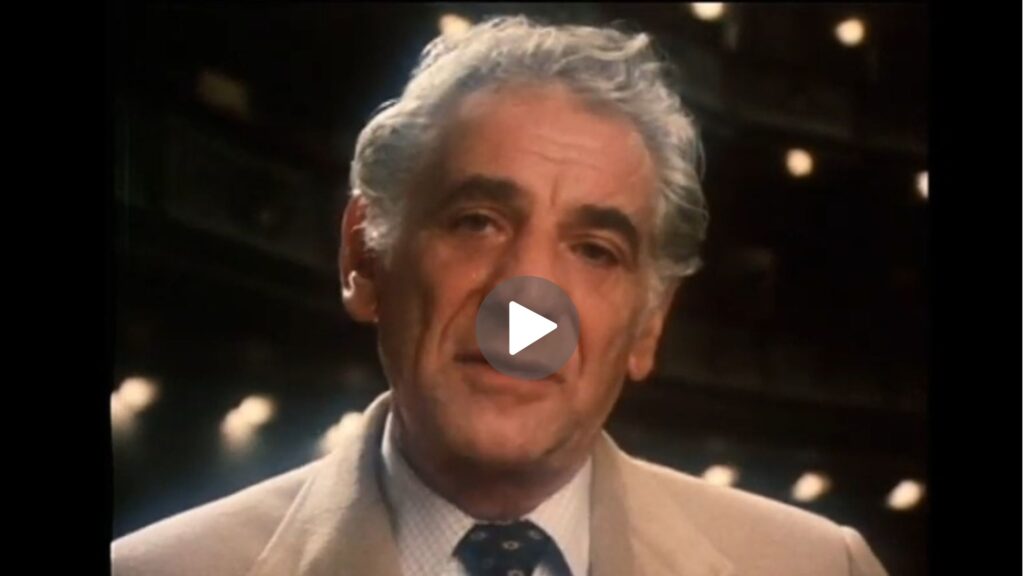
At Curtis, Bernstein studied conducting with Fritz Reiner, and counterpoint and harmony with Richard Stöhr, experiences that helped shape the musical versatility that became a hallmark of his career. Through his eclectic compositions blending jazz, blues, and pop, the conductor-composer helped redefine American classical music itself.
To date, his works are celebrated for their distinctively American—and wholly “Bernstein”—sound. The comic opera Candide and musical West Side Story, a collaboration with iconic American composer Stephen Sondheim and choreographer Jerome Robbins, are particularly notable.
As music director of the New York Philharmonic (1958–69), he also worked tirelessly to champion American composers by programming their works alongside the European canon. Several meaningful collaborators include Ellen Taaffe Zwilich—the first woman to receive the Pulitzer Prize for music—longtime friend Aaron Copland, Charles Ives, and African American composer Julia Perry.
Bernstein also transformed music education through his Young People’s Concerts. Airing from 1958 to 1972, the televised series combined live performances with Bernstein’s engaging explanations of musical ideas, introducing millions of viewers to classical music.
More than half a century later, the Curtis alumnus’ legacy continues to shape American classical music. His artistry transformed how audiences heard American music—and how America heard itself.