Legacy of Voice

From the time of its founding in 1924, Curtis has exerted a profound influence on the world of opera and vocal performance.

The school’s founder, Mary Louise Curtis Bok, was an ardent patron of opera and vocal music. Her visionary support helped establish Curtis as a hub for operatic innovation and excellence in America.

In 1931, she provided substantial funding for the American premiere of Alban Berg’s groundbreaking opera Wozzeck, which featured Curtis students alongside members of the Philadelphia Orchestra under Leopold Stokowski’s direction. She was also a generous patron of Curtis composers, including Gian Carlo Menotti, who dedicated his opera Amelia al ballo (1937) to her.

  • "Curtis is the face of an old colleague you were not expecting to see in the orchestra as you step onto the operatic stage. Curtis is in your curiosity as you challenge yourself to take on a new piece. Curtis is in your tenacity as you face uncertainty but choose to create anyway. Curtis is in your leadership, humility, and collaboration.

    — Amanda Majeski, (Opera ’09)

A Century of Voice and Opera

  • 1924–49: A Foundation of Excellence


    The first Curtis opera, Eugene d’Albert’s “Tiefland,” performed on May 12, 1929, at the Academy of Music.

    From the time of its founding in 1924, Curtis has exerted a profound influence on the world of opera and vocal performance. Curtis founder Mary Louise Curtis Bok, with artistic guidance from conductor Leopold Stokowski and pianist Josef Hofmann, assembled a faculty of leading artists from the U.S. and Europe who would attract the most talented singers and instrumentalists.

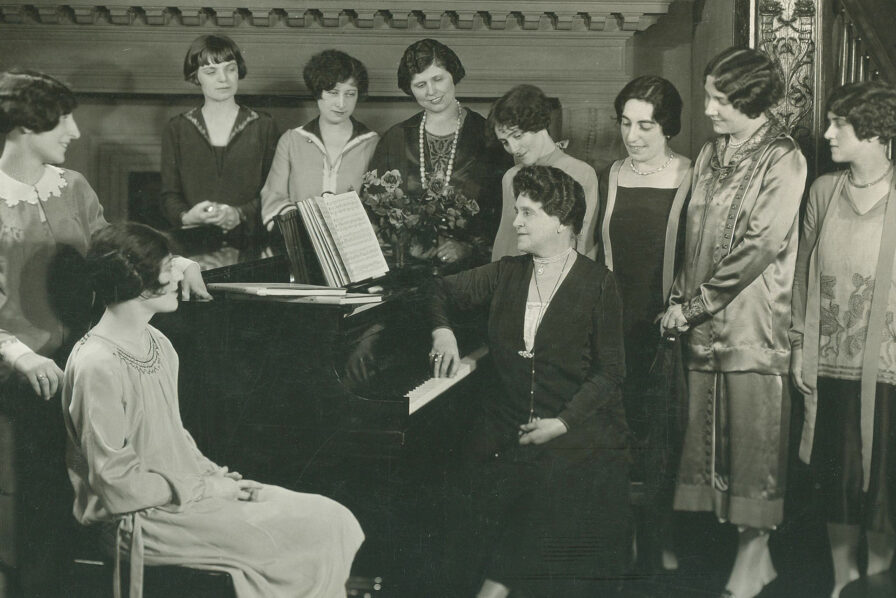
    One of these early faculty members was Polish soprano Marcella Sembrich, an international opera star who became an influential teacher, directing the vocal programs at both Curtis and Juilliard after her retirement from the stage. Among her notable students was Euphemia Giannini Gregory (Voice ’27), who joined the faculty immediately after graduating. Gregory remained at Curtis for 46 years, during which she taught more than 100 students, including Frank Guarrera (Voice ’49), Anna Moffo (Voice ’54), and Judith Blegen (Voice ’64).

    Other prominent early faculty members included baritone Horatio Connell, author of the still-in-print Master Vocal Exercises (1927); baritone Emilio de Gogorza, a prolific recording artist whose vision impairment precluded an opera career; and German soprano Elisabeth Schumann, a favorite singer of Richard Strauss known for her excellence in both opera and lieder.

    Curtis’ learn-by-doing philosophy was evident from the start. The first Curtis opera, Eugene d’Albert’s Tiefland, was performed on May 12, 1929, at the Academy of Music. That same year, Curtis partnered with the Philadelphia Grand Opera Company (a precursor to Opera Philadelphia), with students singing 55 roles in 12 operas during the company’s season. Curtis singers also performed with the Philadelphia Orchestra in landmark productions such as the American premiere of Berg’s Wozzeck (1931), as well as historic performances of Schoenberg’s Die glückliche Hand (1930) and Gurrelieder (1932).

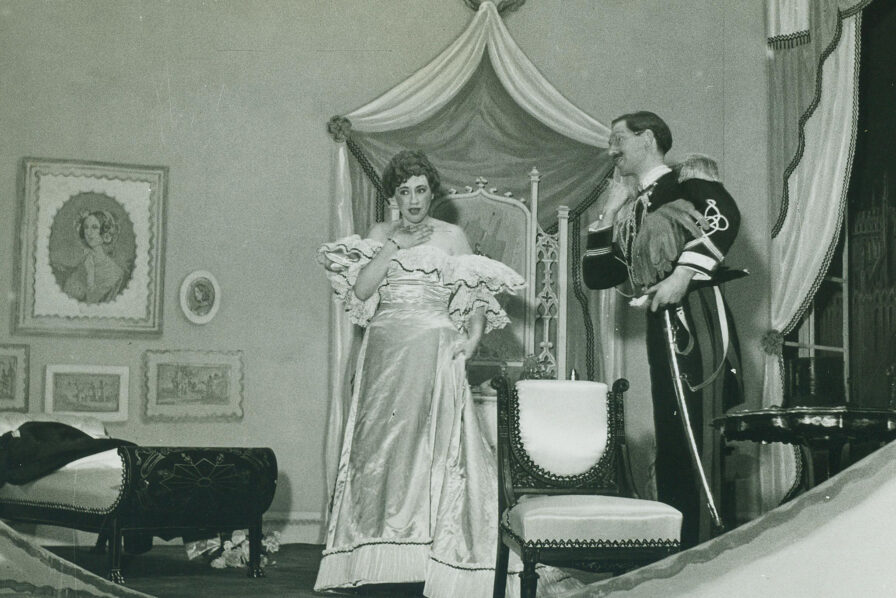
    In 1937, Curtis staged the world premiere of Menotti’s (’33) Amelia al ballo in a double bill with Milhaud’s Le Pauvre Matelot. Amelia reached the Met a year later, launching Menotti’s career as one of the 20th century’s most popular operatic composers. Another notable Curtis Opera Theatre production during this period was the 1949 production of Tchaikovsky’s Eugene Onegin with Louise Parker (Opera ’50) in the lead role of Tatyana and Teresa Green Coleman (Voice ’50) singing the role of Filippyevna. This inclusive casting helped pave the way for talented Black artists in a field long resistant to integration.

    Leading Curtis’ opera program from 1939–50 was Hans Wohlmuth, Ph.D., a stage director affiliated with the Philadelphia Opera Company and later the New York City Opera. An émigré from Vienna, Wohlmuth completed a 400-hour course to qualify as a machinist for the war effort, taking a brief hiatus from his Curtis duties in 1941–42.
  • 1950–86: The Metropolitan Connection


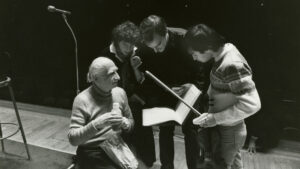
    Max Rudolf with conducting students Barbara Yahr, Mark R. Smith, Mitch Newman during a rehearsal for a performance at the Academy of Music.

    Beginning in 1950, Curtis’ opera program was led for 38 years by a succession of international artists affiliated with the Metropolitan Opera, including stage director Herbert Graf, conductor Max Rudolf, stage director Dino Yannopoulos, conductor and opera coach Boris Goldovsky (Conducting ’34), and conductor Ignace Strasfogel. French baritone Martial Singher joined the Curtis faculty in 1955 and sang on the Met’s roster from 1943 until 1959, when a heart condition curtailed his performing career. He headed Curtis’ opera program from 1960–68.

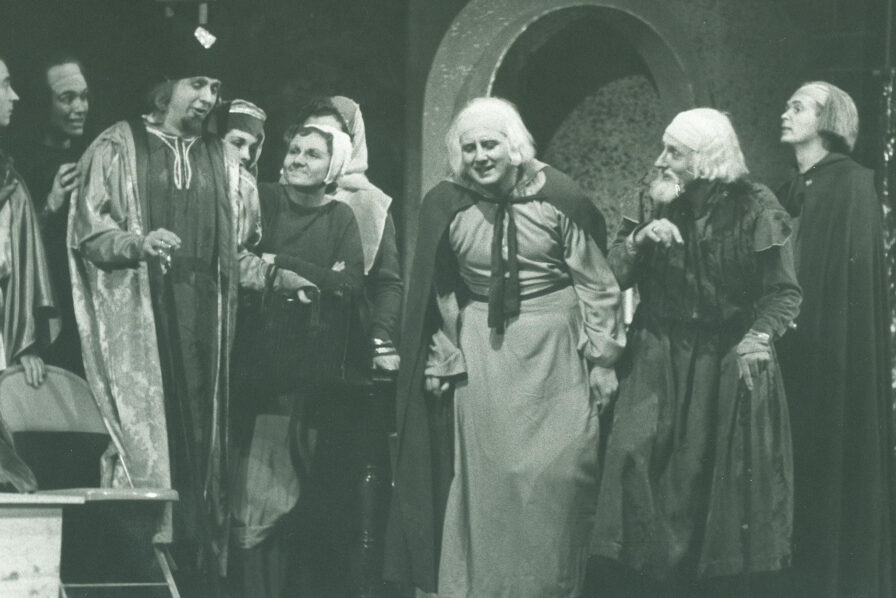
    Max Rudolf’s brief but impactful tenure from 1970 to 1973 saw productions of challenging works such as Wolf-Ferrari’s The School for Fathers and Britten’s The Rape of Lucretia. Dino Yannopoulos, head of opera from 1974 to 1976, continued this innovation, staging the first performance in 20 years of Stravinsky’s The Rake’s Progress and introducing Philadelphia audiences to other rarely performed works, including Cimarosa’s Il Matrimonio Segreto.

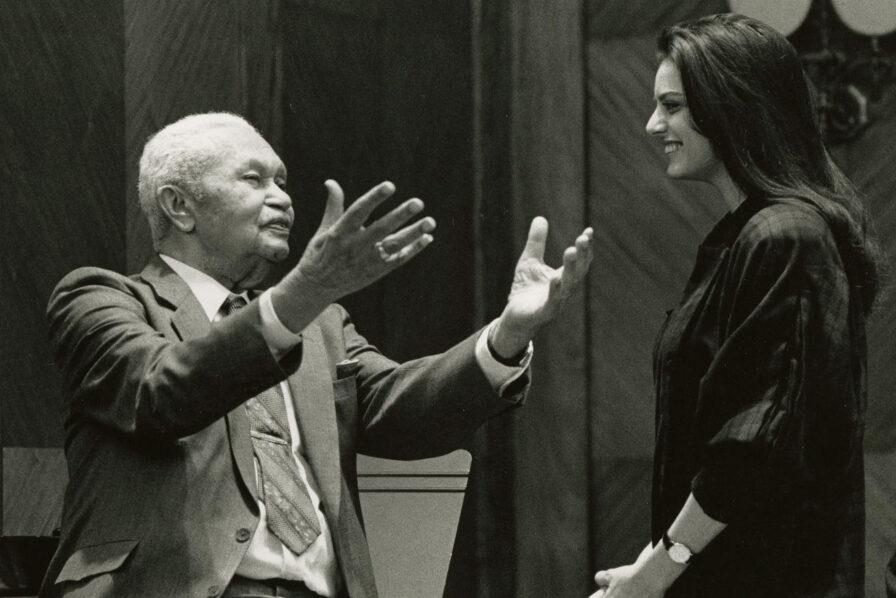
    Notable faculty appointments in the 1970s included Margaret Harshaw, who portrayed more Wagner roles—both as a soprano and mezzo-soprano—than any other singer in Met history, and baritone Robert Todd Duncan, one of the first Black singers to perform with a major opera company and George Gershwin’s personal choice to originate the iconic lead role in Porgy and Bess.

  • 1986–2019: Eliasen Era


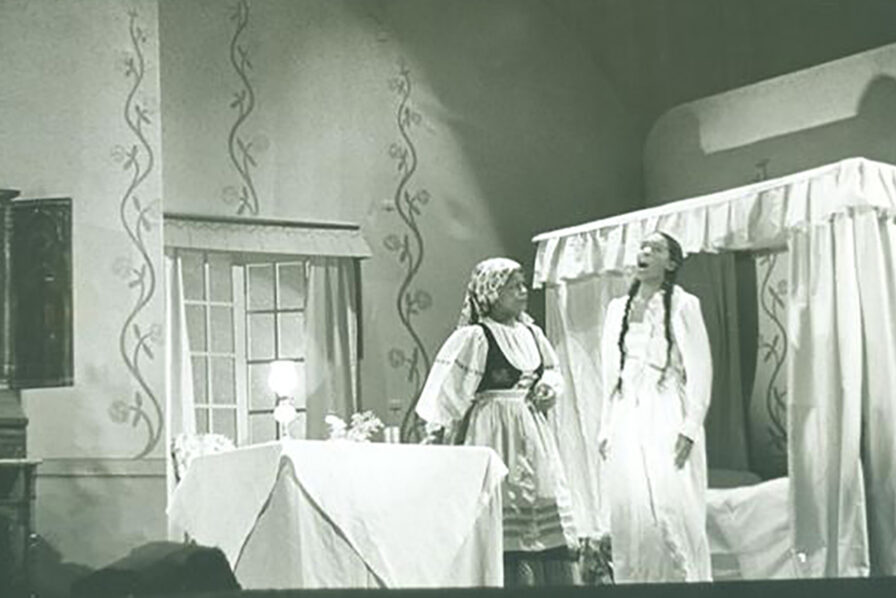
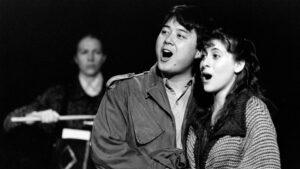
    “Emperor of Atlantis,” 1989

    With the appointments of Marlena Kleinman Malas (Voice ’60) and Mikael Eliasen, 1986 was a pivotal year. Malas served for over 30 years, guiding many singers to stellar careers on the world’s greatest opera and concert stages. Eliasen then became head of vocal studies in 1988, restructuring the curriculum around the Curtis Opera Theatre.

    Eliasen’s programming blended contemporary opera, standard works, and rarely performed masterpieces, including the 1989 Philadelphia premiere of Ullmann’s The Emperor of Atlantis, composed in the Theresienstadt concentration camp during World War II. His innovative, performance-heavy program prepared three decades of successful students, including J’Nai Bridges (Opera ’12), Juan Diego Flórez (Voice ’96), Amanda Majeski (Opera ’09), Eric Owens (Opera ’95), John Relyea (Opera ’96), and Rinat Shaham (Voice ’95, Opera ’98).

    Eliasen also introduced the practice of allowing students to continue working with their pre-Curtis teachers when feasible, a unique aspect still in place today. Later named the Hirsig Family Chair of Vocal Studies and artistic director of Curtis Opera Theatre, Eliasen remained at Curtis for 32 years until 2019.

    Two additional significant figures in Curtis’ vocal program were pianists Danielle Orlando and Ghenady Meirson (Accompanying ’81, ’84). Orlando, a vocal coach and accompanist to many international opera singers, served on the Curtis faculty from 1986 to 2020 and led the department with Eric Owens in her final year. Born in Odessa, Ukraine, Meirson came to Curtis in 1977. On his first day, he met fellow student Laura May Davis (Voice ’83); they later wed and had two children together. A specialist in Russian repertoire, Meirson joined the Curtis faculty in 1990, where he was a beloved vocal coach for 31 years until his death from cancer in 2021.

    The vocal faculty continued to grow with the addition of internationally renowned soprano and influential teacher Joan Patenaude-Yarnell in 1996. She served on the Curtis faculty for 30 years, further enriching the program with her expertise and dedication to nurturing young vocal talents.

  • 2020–present: A New Chapter


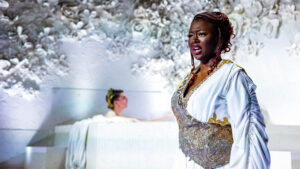
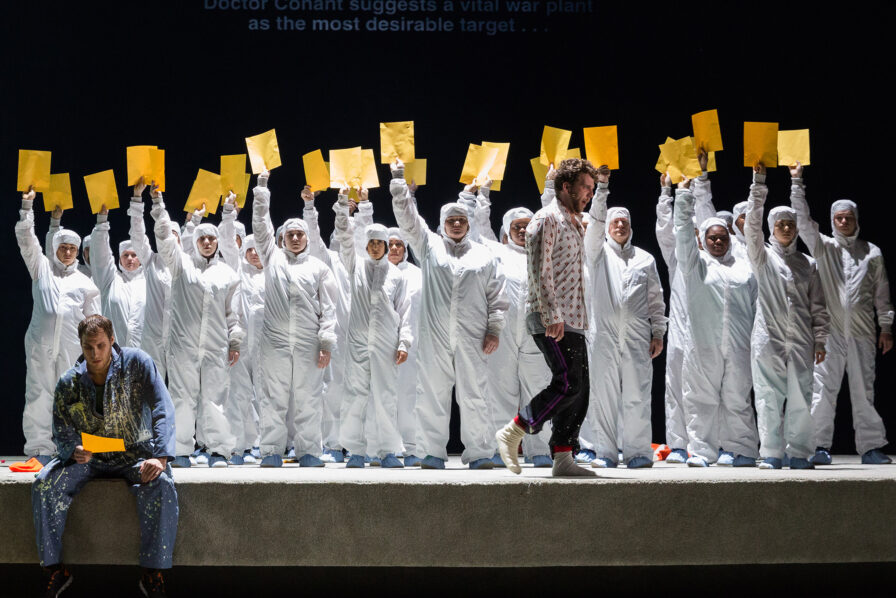
    “The Comet / Poppea,” 2024

    From 2020-25, bass-baritone Eric Owens (’95) was the head of vocal studies and opera, with pianist/conductor Miloš Repický working alongside as Director and Hirsig Family Chair in Vocal Studies and Opera. As esteemed artists, both perform actively, including Curtis on Tour appearances that involved students in their concert work. Their presence at Curtis reinforced the historic ties between Curtis and the Metropolitan Opera. Owens made his Met debut in 2008 and has since performed numerous leading roles, including Alberich and Hagen in the Met’s Ring cycle. Repický is on the music staff at the Met, where he serves as assistant conductor and prompter, has played harpsichord continuo for Le nozze di Figaro, and has led the musical preparation of numerous operas. Students have additionally benefited from opera-in-concert performances with the Curtis Symphony Orchestra, conducted by Yannick Nézet-Séguin, who serves as head of conducting at Curtis and is
    the internationally renowned music director of both the Metropolitan Opera and the Philadelphia Orchestra. The recent establishment of a symphonic and operatic conducting fellowship, modeled after Nézet-Séguin’s career, reinforces the connection between Curtis and the world’s leading opera houses.

    In 2025, Repický engaged a visionary team of advisors to continue expanding upon the foundations he laid with Owens. Karen Slack (’02), creative advisor; Amanda Majeski (’09), pedagogical advisor; and John Matsumoto Giampietro, dramatic advisor work closely with Repický to further the student-centric model and foster extraordinary musicianship. The department creates bespoke performing opportunities, produces innovative operas each season, and fosters interdepartmental collaborations. Special performance activities have included a new Operas on Film series beginning with MERCY, a reimagining of Mozart’s La clemenza di Tito released in November 2021; collaborations with leading Baroque specialist conductors such as Nicholas McGegan, who conducted Handel’s L’Allegro, il Penseroso ed il Moderato at Curtis in fall 2023; and, in November 2024, the East Coast premiere of The Comet / Poppea, featuring George Lewis’ The Comet juxtaposed with Monteverdi’s L’incoronazione di Poppea, which was realized through a landmark partnership between Curtis and organizations across the United States.

    All Curtis vocal studies students are cast regularly throughout each season, gaining unparalleled performance experience.
    This training has led to numerous graduates performing with top opera companies worldwide, including La Scala, Covent Garden, the Vienna Staatsoper, Houston Grand Opera, San Francisco Opera, and the Metropolitan Opera, where more than 60 Curtis alumni have sung.

1925
First Voice Alumni

Vocal students have been part of Curtis since the beginning.

795
Total Voice & Opera Alumni

How many names do you recognize on this list of Curtis alumni? View list

24
Students

There are usually 24 students studying voice or opera at Curtis in any given year.

Legacy of Curtis

Leading to its centennial year, Curtis began a multi-year project celebrating each of the school’s major areas of study.

Explore More