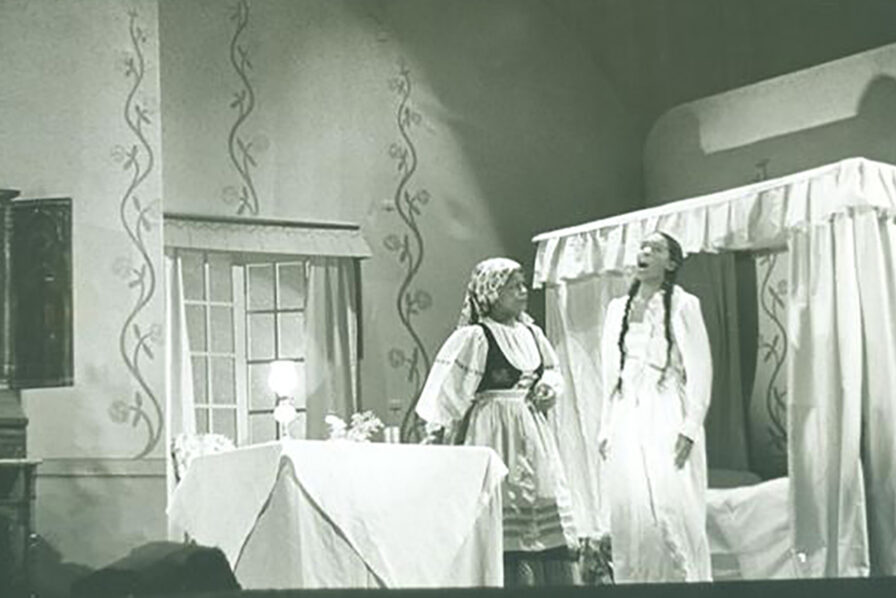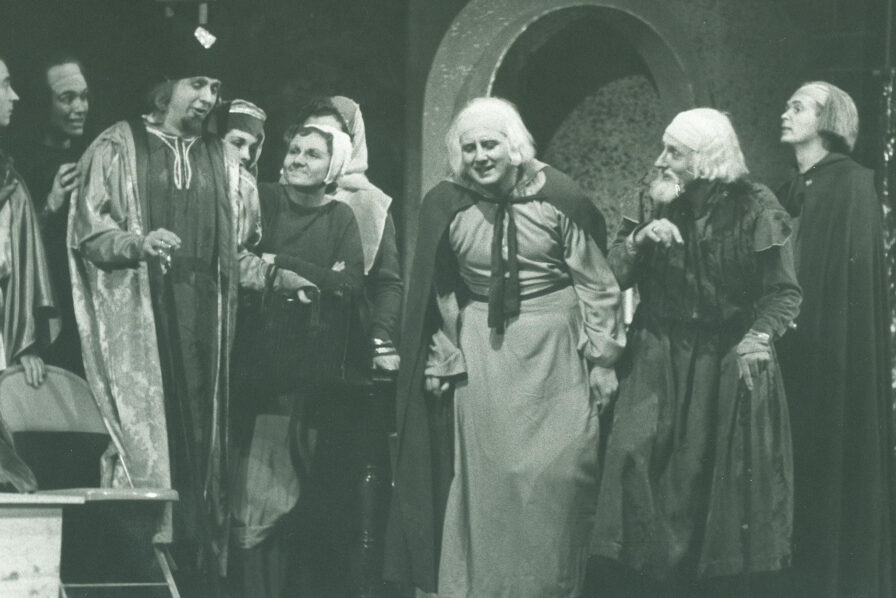
The first Curtis opera, Eugene d’Albert’s “Tiefland,” performed on May 12, 1929, at the Academy of Music.
From the time of its founding in 1924, Curtis has exerted a profound influence on the world of opera and vocal performance. Curtis founder Mary Louise Curtis Bok, with artistic guidance from conductor Leopold Stokowski and pianist Josef Hofmann, assembled a faculty of leading artists from the U.S. and Europe who would attract the most talented singers and instrumentalists.
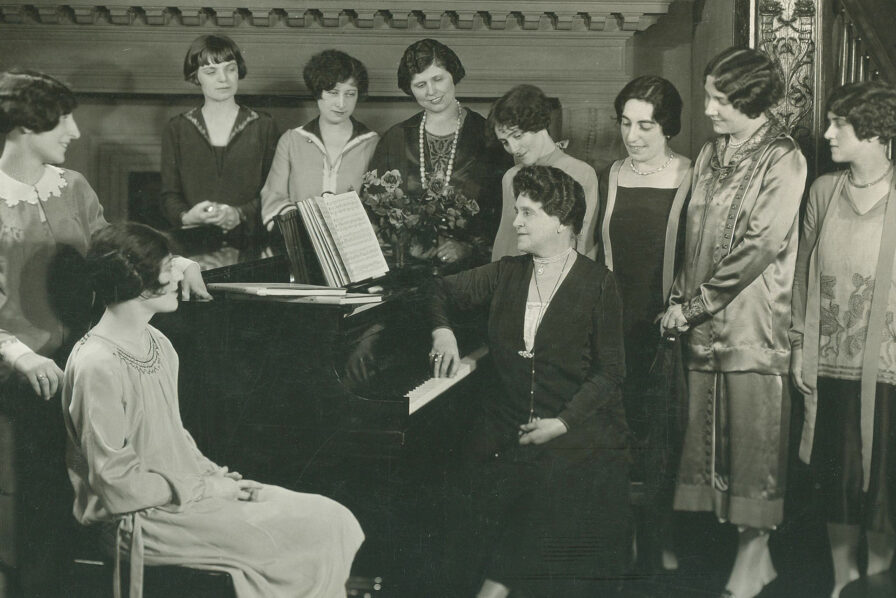
One of these early faculty members was Polish soprano Marcella Sembrich, an international opera star who became an influential teacher, directing the vocal programs at both Curtis and Juilliard after her retirement from the stage. Among her notable students was Euphemia Giannini Gregory (Voice ’27), who joined the faculty immediately after graduating. Gregory remained at Curtis for 46 years, during which she taught more than 100 students, including Frank Guarrera (Voice ’49), Anna Moffo (Voice ’54), and Judith Blegen (Voice ’64).
Other prominent early faculty members included baritone Horatio Connell, author of the still-in-print Master Vocal Exercises (1927); baritone Emilio de Gogorza, a prolific recording artist whose vision impairment precluded an opera career; and German soprano Elisabeth Schumann, a favorite singer of Richard Strauss known for her excellence in both opera and lieder.
Curtis’ learn-by-doing philosophy was evident from the start. The first Curtis opera, Eugene d’Albert’s Tiefland, was performed on May 12, 1929, at the Academy of Music. That same year, Curtis partnered with the Philadelphia Grand Opera Company (a precursor to Opera Philadelphia), with students singing 55 roles in 12 operas during the company’s season. Curtis singers also performed with the Philadelphia Orchestra in landmark productions such as the American premiere of Berg’s Wozzeck (1931), as well as historic performances of Schoenberg’s Die glückliche Hand (1930) and Gurrelieder (1932).
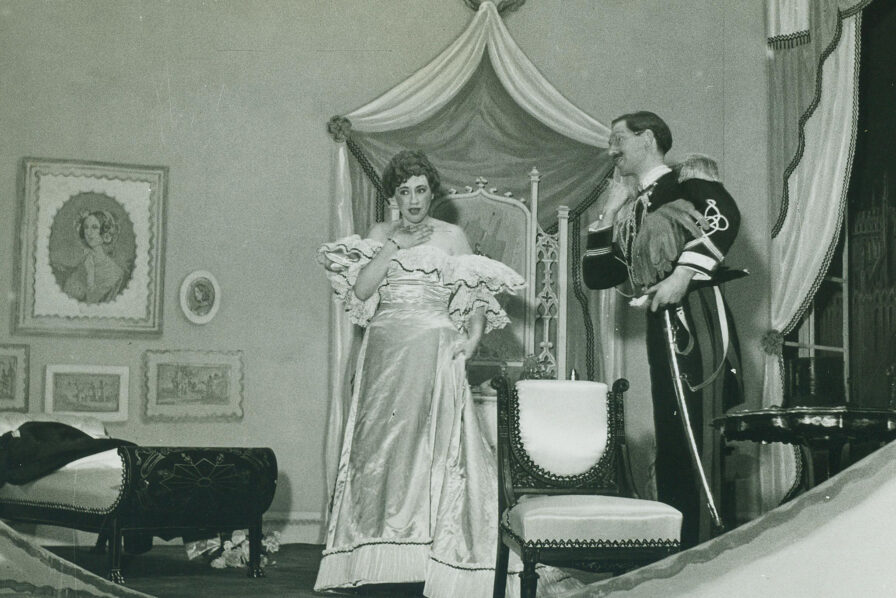
In 1937, Curtis staged the world premiere of Menotti’s (’33) Amelia al ballo in a double bill with Milhaud’s Le Pauvre Matelot. Amelia reached the Met a year later, launching Menotti’s career as one of the 20th century’s most popular operatic composers. Another notable Curtis Opera Theatre production during this period was the 1949 production of Tchaikovsky’s Eugene Onegin with Louise Parker (Opera ’50) in the lead role of Tatyana and Teresa Green Coleman (Voice ’50) singing the role of Filippyevna. This inclusive casting helped pave the way for talented Black artists in a field long resistant to integration.
Leading Curtis’ opera program from 1939–50 was Hans Wohlmuth, Ph.D., a stage director affiliated with the Philadelphia Opera Company and later the New York City Opera. An émigré from Vienna, Wohlmuth completed a 400-hour course to qualify as a machinist for the war effort, taking a brief hiatus from his Curtis duties in 1941–42.