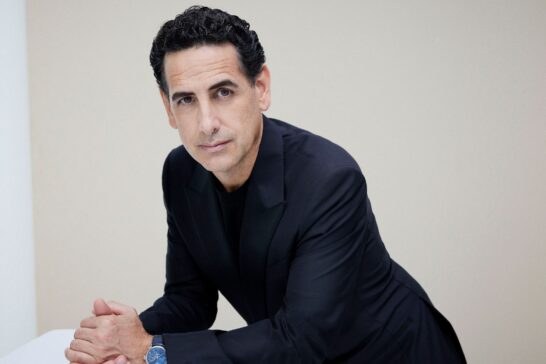
A Portrait of Trailblazing Composer George Walker

When George Walker (Piano and Composition ’45) wrote his stirring Lilacs for Voice and Orchestra, he never imagined it’d become a pinnacle of his career. But in 1996, when he won the Pulitzer Prize in Music for the piece—and became the first Black composer to do so—it was clear his lifelong ingenuity had found its moment.
The Boston Symphony-commissioned work is characteristic of his elegant and eclectic style: It blends opera, strings, and poetry as a haunting elegy for President Abraham Lincoln.
“I [wanted to find] a way of doing something that was different, something that I would be satisfied with,” Walker said of his approach to composition.
Walker’s Pulitzer was only one of many of his African American “firsts.” He was the first Black instrumentalist to perform as a soloist with the Philadelphia Orchestra, the first Black pianist to play a recital at New York’s Town Hall, and among the first Black graduates of Curtis.
At a time when classical music institutions were almost exclusively white, his presence was a meaningful disruption—and a powerful signal of possibility.
“It was very rare to see Black composers during that time,” David Serkin Ludwig (Composition ’01) says of Walker’s career path. “There’s still work to be done to promote inclusion in classical music, but George Walker [helped advance it].”
That forward motion is embedded in Walker’s music itself. Across his nearly 100 compositions, he remained rooted in the modern classical tradition while drawing inspiration from African American spirituals, blues, and jazz.
Walker’s melancholic Lyric for Strings remains his most popular calling card. Adapted for orchestra from his first string quartet, the six-minute work is a deeply emotional tribute to his grandmother.
Frequently performed by the Philadelphia Orchestra at its Martin Luther King, Jr., tribute concerts, Lyric for Strings was also performed by the Curtis Symphony Orchestra in 2018, with Walker in attendance. Just weeks later, he received Curtis’ prestigious President’s Alumni Award.
George Walker passed away on August 23, 2018, at age 96. Though he is no longer with us, his influence endures—reshaping the landscape of American classical music and widening its doors for generations of Black musicians to come.
Learn more about George Walker and his enduring impact on American music.