Bartók’s Concerto for Orchestra Illuminates Darkness, Resilience, and Vitality

Few orchestral works illuminate the inner workings of an ensemble like Béla Bartók’s Concerto for Orchestra. Rather than featuring a single soloist, the five-movement work spotlights each section as a virtuosic voice, allowing winds, brass, and strings to emerge as individual and distinctive personalities.
The result is masterwork that deftly guides listeners through moods and harmonies, weaving together an enduring musical message of uncertainty, resilience, and vitality. In Bartók’s words, “It is a gradual progression from the severity of the opening movement… to the life-affirming energy of the finale.”
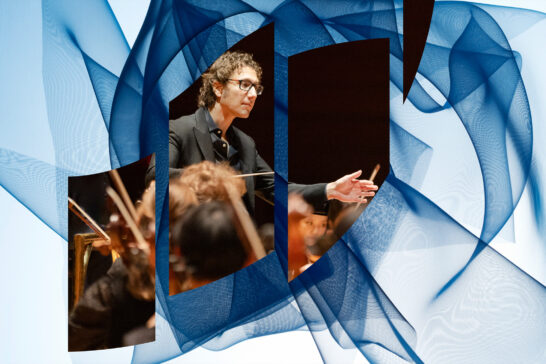
On Sunday, January 25 at 3:00 p.m., audiences can experience this first-hand as the Curtis Symphony Orchestra performs the work under the baton of renowned Finnish conductor Osmo Vänskä. The program also includes works by Missy Mazzoli and Henry Dorn, and the world premiere of David Serkin Ludwig’s (Composition ’01) A Book of Forgotten Creatures, a concerto for Grammy-winning woodwinds quintet Imani Winds.
The work’s shadowed emotional arc reflects Bartók’s life circumstances. The composer conceived it in a New York sanatorium, seeking treatment for what would later be diagnosed as leukemia. His illness coincided with the rising threat of the Nazi regime in his native Hungary, which he and his wife had fled just a few years earlier.
But the concerto, commissioned by Boston Symphony Orchestra conductor Serge Koussevitzky, seemed to bring Bartók new life: He composed it in just two months.
Premiered in 1944, the work sadly became one of his last. Bartók died the following year, less than 12 months after its debut, a victim to his ongoing illness.
As critic Alex Ross says in The Rest Is Noise, Bartók’s Concerto for Orchestra is his “parting gift to his adopted country… a portrait of democracy in action.”
Experience Bartók’s Concerto for Orchestra with Curtis Symphony Orchestra, alongside Ludwig’s world premiere, on January 25 at 3:00 p.m. at Marian Anderson Hall, Kimmel Center. Tickets begin at $28.